

This week marked a major moment for Europe’s civic‑tech ecosystem, with the EU Civic Tech Hackathon and the High‑Level Event on Democracy bringing together innovators, institutions and practitioners to explore how digital tools can strengthen participation, trust and democratic resilience across the Union. As Commissioner Michael McGrath reminded participants: “Democracy can only be delivered with people — whoever they are, and wherever they are.”
On June 24th, the European Commission convened the High‑Level Event on Democracy, bringing together Member States, EU institutions and key stakeholders working on democratic innovation. The event focused on reinforcing democratic resilience, safeguarding the information space and expanding meaningful opportunities for citizen engagement.
Announced under the European Democracy Shield, the event offered a moment to review progress across its priority areas: strengthening democratic institutions, ensuring free and fair elections, supporting independent media, and boosting societal resilience and participation.
Participants shared practical experiences, discussed ongoing initiatives and reflected on how democratic institutions can remain open, inclusive and responsive in a rapidly changing technological landscape. The event also showcased emerging work on democratic innovation and reinforced cooperation across sectors.
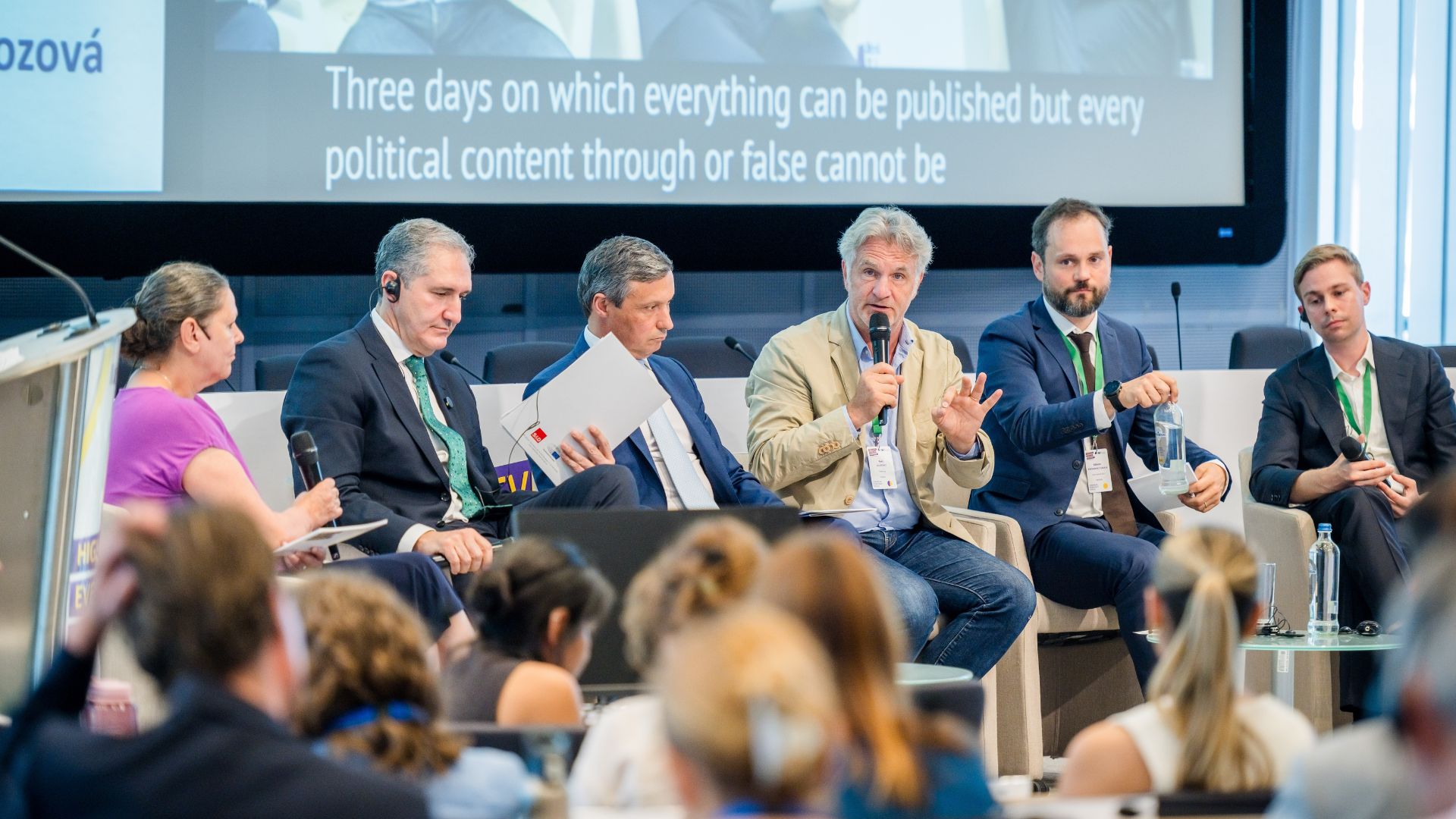
Axel Dauchez, Co-founder and Chairman of Make.org, participated in the panel on AI in electoral processes alongside José Cepeda and Paulo Cunha, both Co‑rapporteurs for the Council of Europe Framework Convention on Artificial Intelligence, Alberto Fernandez Gibaja, Head of Digitalization and Democracy at International IDEA and Nicolas Mattis, Postdoctoral researcher at the University of Amsterdam. Moderated by Irena Moozova, Deputy Director‑General of DG JUST, the session explored how AI is already shaping political communication and campaigning, how it influences voter behaviour, and what lessons can be drawn from global experiences in ensuring responsible and trustworthy use of AI in elections.
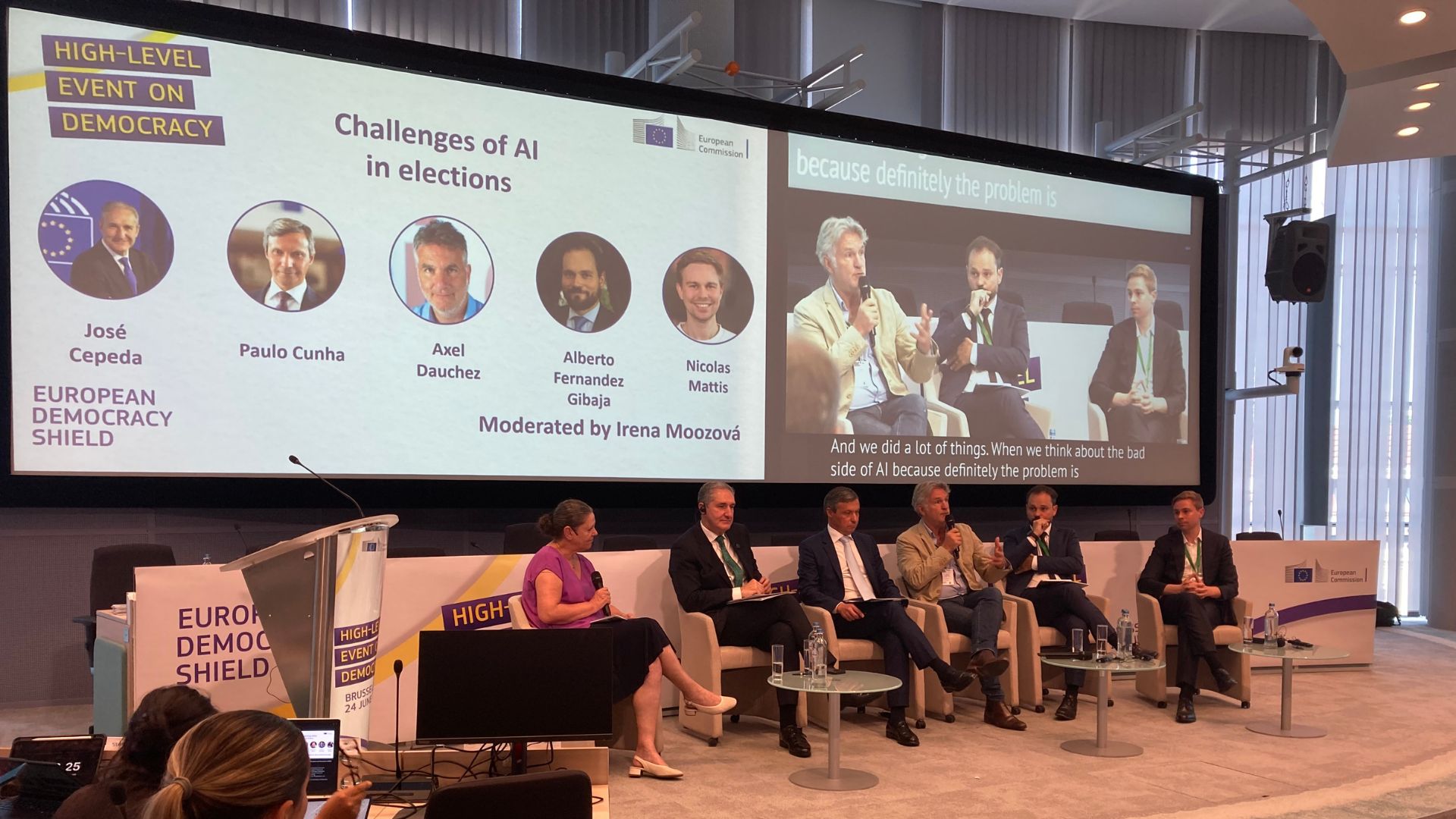
Together, the panelists discussed the opportunities AI offers to support democratic engagement such as improving accessibility, strengthening participation and enhancing communication between institutions and citizens. They addressed the risks linked to manipulation, disinformation and opaque political targeting. They reflected on the biggest gaps that still need to be addressed, the actors who should be prioritised when developing standards and guidance, and the measures required to ensure that AI contributes to fairer, more resilient electoral processes.
Here is the link to rewatch the event (and the panel on AI and elections at 13:52:00): https://webcast.ec.europa.eu/high-level-event-on-democracy-gasp-2026-06-24
The European Commission hosted its first EU Civic Tech Hackathon on 22–23 June 2026 in Brussels, gathering developers, researchers, public authorities and civic‑tech practitioners to explore how technology can reinforce democratic participation. The event took place within the broader framework of the European Democracy Shield, the Commission’s long‑term strategy to strengthen democratic resilience.
This policy direction builds on a series of initiatives that have shaped the EU‑level debate on democratic renewal. Among them, Make.org’s publication of The Democratic Shield in December 2023 proposed practical measures to safeguard the integrity of the 2024 European elections. Several of these ideas contributed to the wider reflection that informed the Commission’s own Democracy Shield initiative, helping bring civic tech more firmly onto the EU agenda and highlighting the need for structured support to the ecosystem.
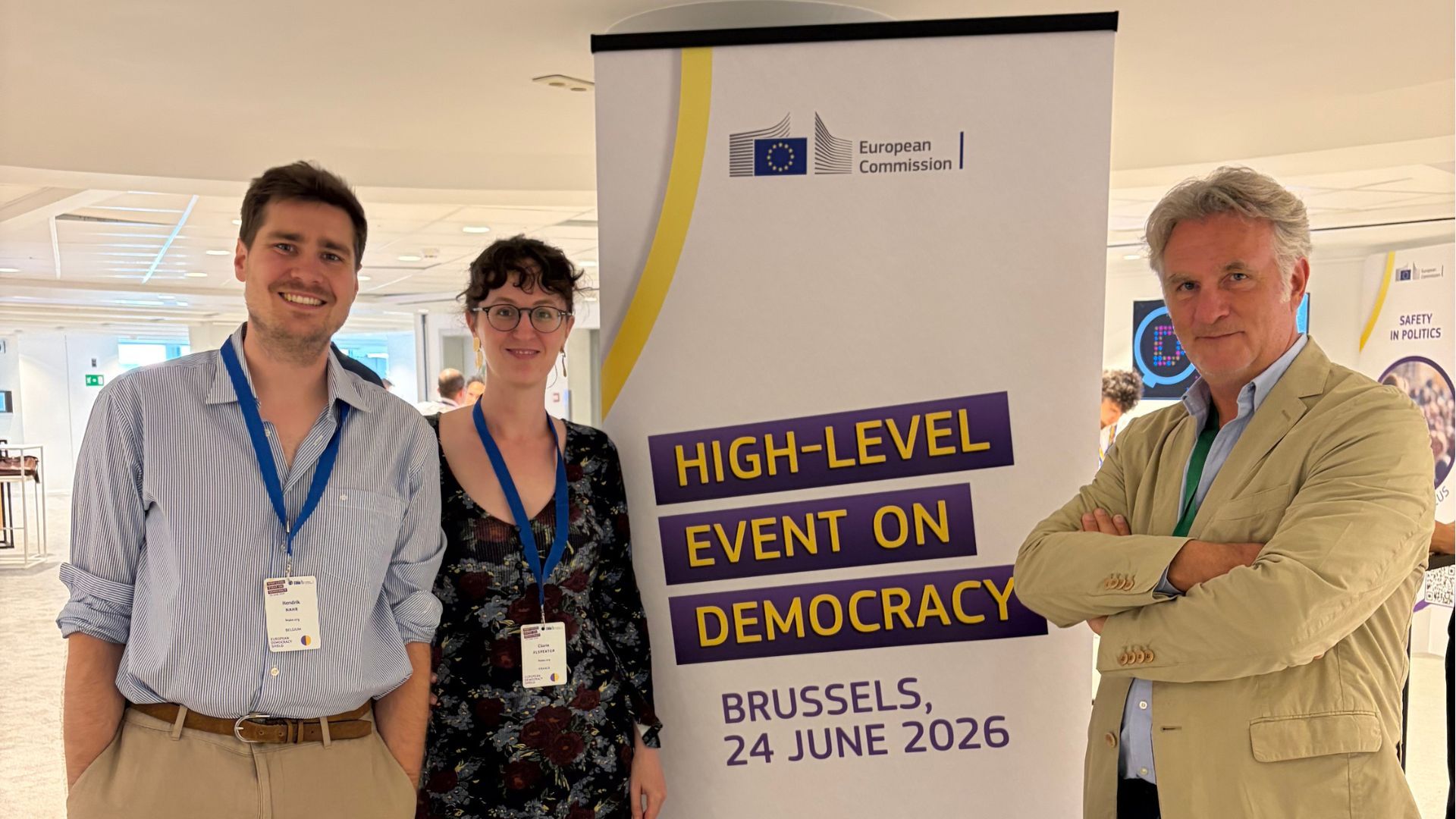
Make.org’s Head of European Affairs, Hendrik Nahr, took part in this inaugural edition. Over two days, he joined a multidisciplinary team to develop sub:stance, a participation platform built around a conversational interface designed to help citizens move beyond surface‑level reactions and engage more deeply with public issues. This approach reflects Make.org’s commitment to meaningful, large‑scale participation.
Beyond prototyping, the hackathon offered a valuable moment for Europe’s civic‑tech community to reconnect, exchange ideas and meet new innovators tackling similar challenges. The momentum generated now points toward the next step: ensuring civic‑tech solutions continue to find their place in public action and democratic life.
These two events highlighted the growing momentum behind democratic innovation and the collective commitment to building more open, resilient and participatory spaces across Europe.