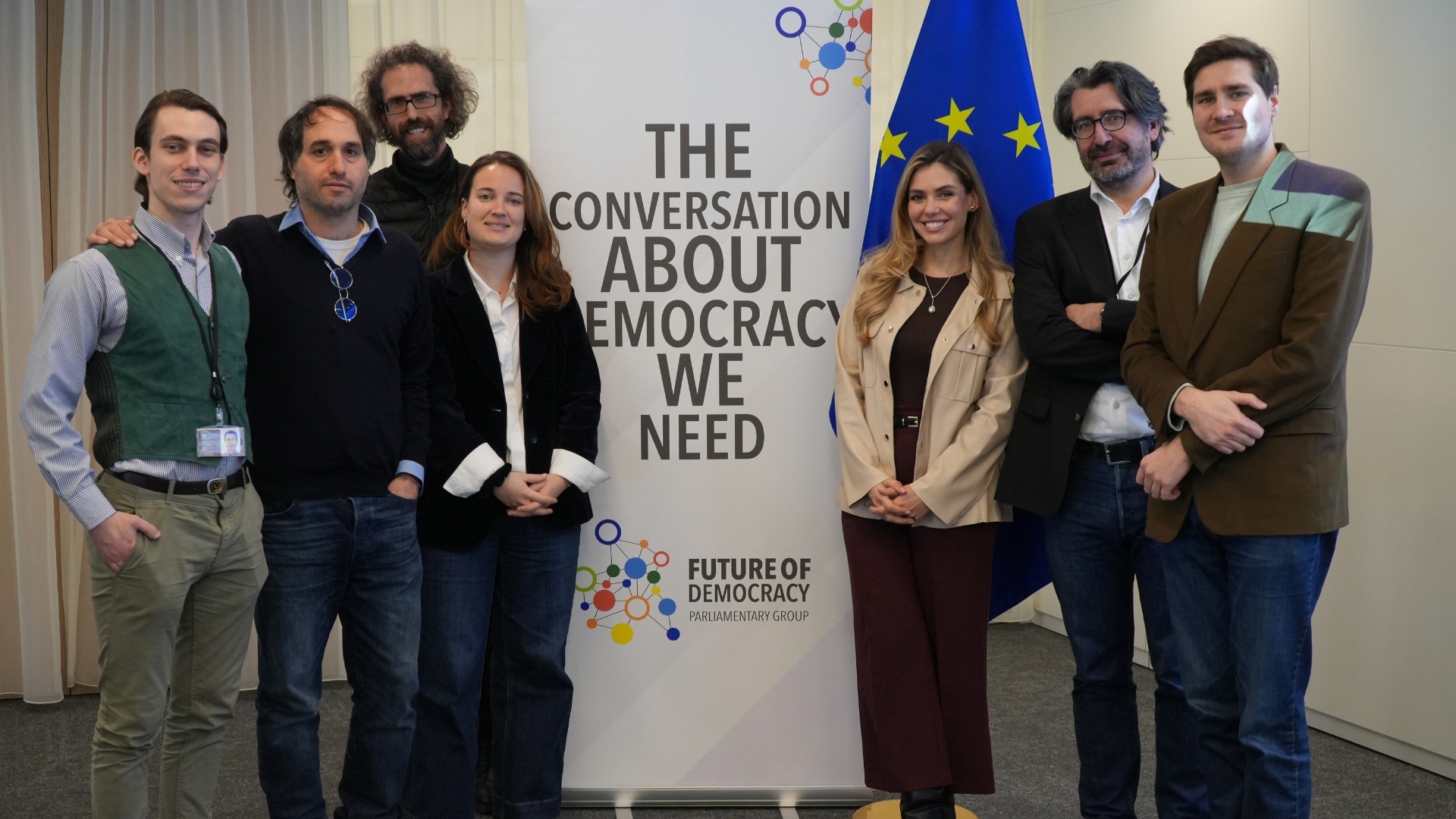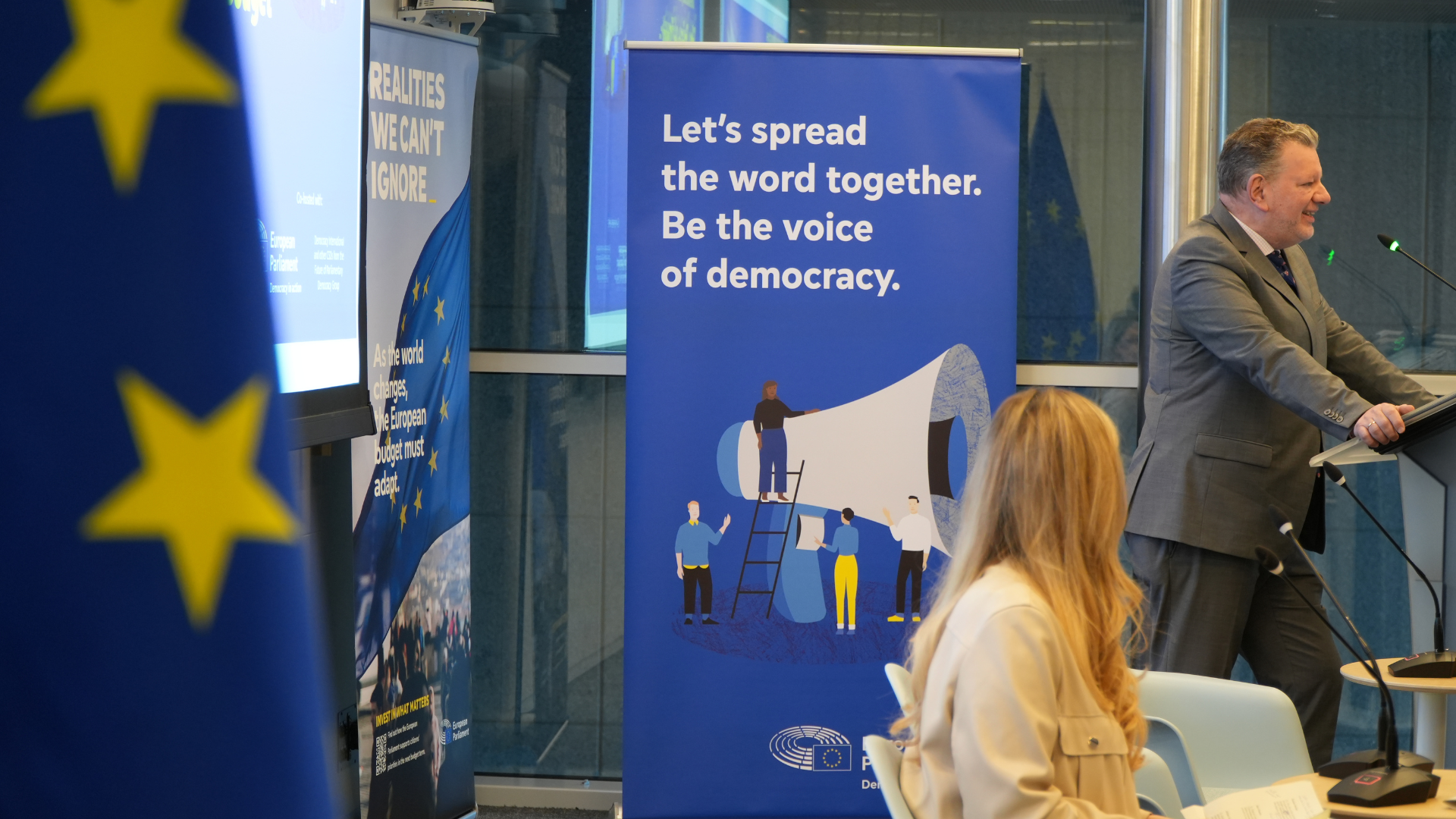
Last week, the Future of Democracy Parliamentary Group, of which Make.org is part of, hosted an event in the European Parliament about the “Price of Trust” ahead of the new EU’s Multiannual Financial Framework (MFF). This conversation gathered high-level speakers from the EU institutions as well as civil society organisations, which together gave the momentum for important discussions on regions, democracy and the EU’s future budget.
The central question that guided the panel discussion was “What does trust really cost?”, and how the European institutions can take leverage of the new MFF to increase the trust among its citizens. The speakers agreed that this financial instrument, if used properly, can improve the EU’s transparency and accountability, which ultimately would increase the trust citizens have in this institution.
Indeed, as Sauri Ratio, the Committee of the Regions’ Rapporteur on the MFF, said “the world needs an adult in the room - and the EU can perfectly be it”, but she emphasised that for that to happen, the EU needs to anchor on better transparency and accountability. As representative of a region in Finland, she says that some citizens first rely on their local or regional institutions rather than the EU, but that can be changed if the EU proves in its next budget that regions matter and that they have a voice in the decision-making process.
Complementary to that, Gillian Coughlan, the Councillor of Cork and Member of the Committee of the Regions, added that EU funding needs to reach the population in general, giving the example of farmers in rural areas that often feel overlooked and marginalised by Brussels. By directly targeting this sector of the population, she argues that the EU listens to everyone and is worried about every region. Another relevant aspect is the Citizens' Assembly process that is held in Ireland and that should have a spillover effect to other EU regions, allowing citizens to have an input in the MFF’s design.

Niccolo Milanese, from the NGO European Alternatives, gave the example of the European Citizens’ Initiative on safe abortion, ‘My Voice, My Choice’, showcasing that when people come together to defend something they believe in, it can actually have a positive impact on the EU's law-making process. This way, he defends that citizen participation and citizens’ initiatives should be even more encouraged by the EU because it enables people to have a voice and see that they had real influence in bureaucratic processes, increasing the EU’s transparency.
Speaking of transparency, Rosita Hickey from the European Ombudsman Office said that if the Commission takes over one year to address the complaints made by EU citizens to the European Ombudsman, then it cannot expect real and meaningful civic participation. She revealed a positive case from which some good practices have resulted, which was the work with the OECD on the Recovery and Resilience Facility (RRF) transparency issue, which allowed to give a better picture of what was happening within the EU Member States at that time.
This way, the public was able toexplore the intersection between regions, democracy and the Multiannual Financial Framework, and attest how relevant the role each of them have in the overall transparency and accountability of the EU, which in turn can be considered the price of trust.
This event was organised by the Future of Democracy Parliamentary Group, bringing together Make.org, Democracy International, European Alternatives, FIDE, Alliance4Europe, European Citizens’ Initiative and the University of Bologna.