Many of us will need care and support ourselves or have loved ones who do because ageing, disability or serious illness makes it harder to do the everyday things we take for granted. But the way social care works currently doesn’t work for the people who need it most, and previous attempts to fix it have stalled.
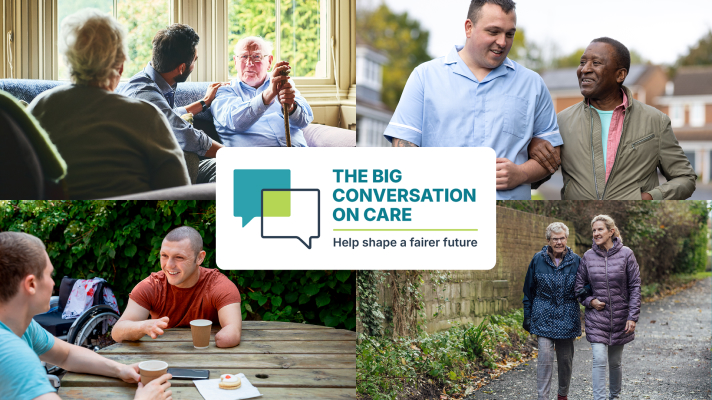
We know things have to change, but there are big choices involved. These choices affect us all, so it’s only right the whole country has a say on the future of adult social care. That’s what the Big Conversation on Care is: an open, honest conversation with people from all walks of life. The Big Conversation on Care will involve people from across England, drawing on the experiences of those who receive care, those who provide care, and the wider public.
Why the Big Conversation on Care is happening
Last year the Prime Minister appointed Baroness Louise Casey to lead a new Independent Commission on Adult Social Care (called the Casey Commission).
When we say “adult social care” we mean the support that some adults need to help them stay independent, safe and well. This includes adults of all ages, including older people who become frail or ill, and adults with disabilities or illnesses who receive support to help them with this. This might include help with everyday things like cooking, washing and getting dressed, getting around at home, finding a job or being part of the community.
Social care often doesn’t work for the people who need it most, and previous attempts to fix it have stalled. Things have to change.
But reform of social care is a complicated and sensitive issue. There are big, hard choices that affect everyone, so it’s only right the whole country has a chance to share their views.
The Casey Commission is carrying out this Big Conversation to understand what the public wants from adult social care and how it can best meet the current and future needs of the population.
The Big Conversation on Care will help the Commission to make recommendations for how the UK Government should reform the current system, so that it is better and fairer for everyone.
What the Big Conversation on Care involves
The Casey Commission has asked Ipsos UK and their team of independent researchers and engagement specialists to lead the Big Conversation on Care. Ipsos is working in partnership with Make.org – a digital conversation platform.
We want to hear directly from hundreds of thousands - online, in communities, and among the people who work in care. And a nationally representative group of the public will take the time to work through the trade-offs and find common ground.
How you can get involved in the online platform
Taking part is quick, easy, and completely anonymous.
1. See our one big question: First, we will ask you one big question about adult social care.
2. Vote on other people’s ideas: Next, you will see ideas shared by other people across the country. You can vote on whether you agree, disagree, or are neutral about their suggestions. You can vote on as many ideas as you like!
3. Share your ideas: You can then type in your own idea or solution in a short sentence starting with ‘we should...’.
4. Tell us a bit about you: At the end, we will ask a few quick, optional questions about who you are (such as your age and region). This simply helps us make sure we are hearing from a fair and equal mix of people across England.
Thank you for participating and sharing your voice. To help us ensure we hear from as many diverse people as possible, please consider sharing this platform with friends, family, or someone from a different generation to yourself.
Launch of the first online phase of the Big Conversation on Care
Vote only phase: no more proposals are accepted, to make sure they all receive enough votes
End of the first online phase of the Big Conversation on Care